
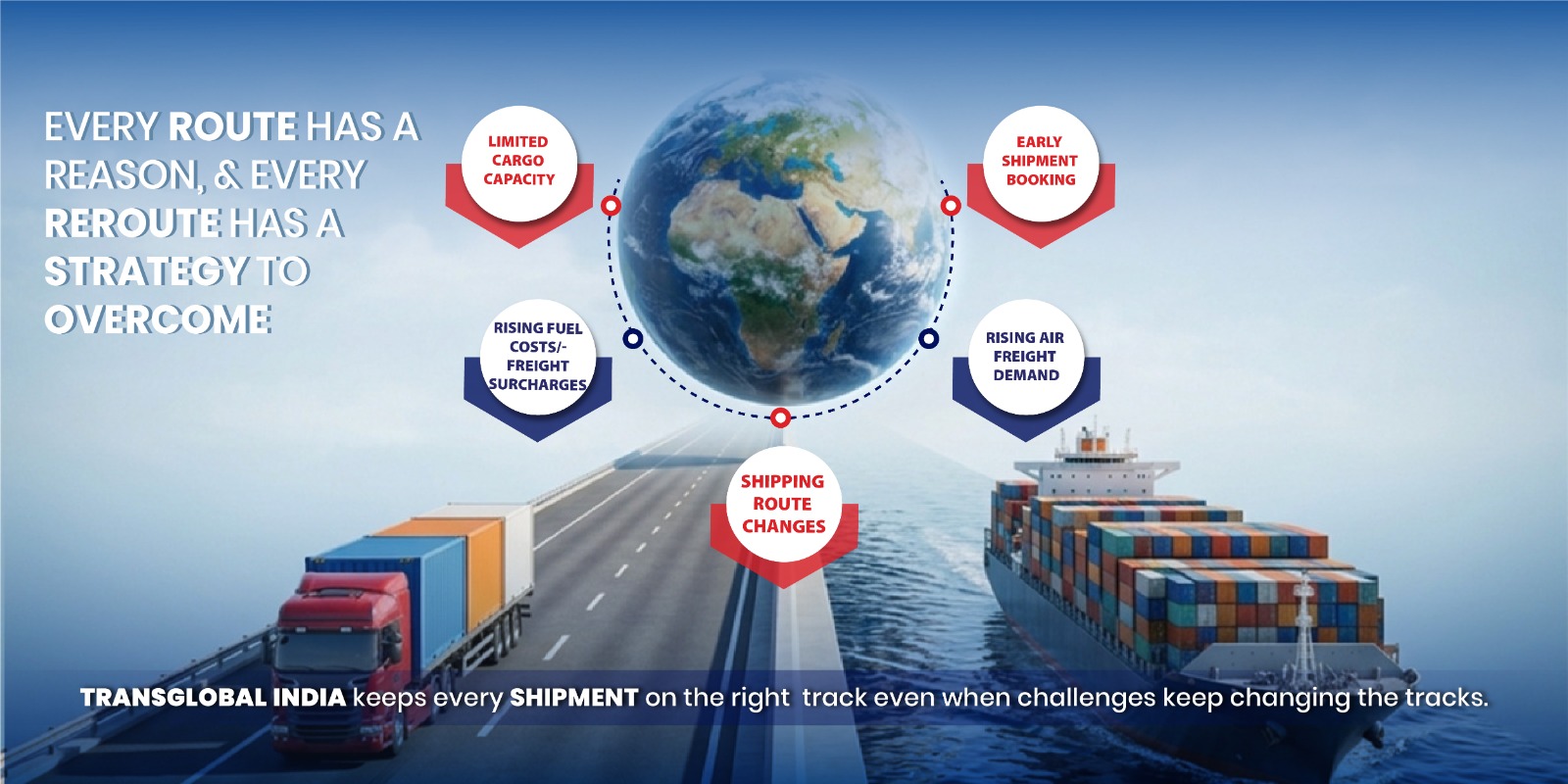
Modern logistics and supply chains are currently confronted with a broad range of challenges associated with geopolitical tensions, limited transportation capacity, and increased costs. Companies trying to keep up with the modern world trade market and the continuous international cargo flow changes have to face numerous issues during freight arrangements.
Transportation Market Trends and Global Trade Conflicts
Recent international market conditions and geopolitical tensions have a significant impact on freight transportation and are a major threat to international trade. The current international situation, including regional conflicts, trade restrictions, geopolitical tensions, and market fluctuations, has a considerable impact on the world freight market.
Notably, there has been an increased risk in international air freight transportation due to the demand for faster delivery methods. As a result, the supply of aircraft has become limited, contributing to the emergence of higher tariffs and constraints on international flights.
The issue of limited transport capacity has also increased air freight transportation costs as shippers compete to book available cargo space for higher prices. Similar challenges have been observed in ocean freight transportation as well, where the number of vessels available for transportation has been insufficient to meet demand.
The Limited Capacity of Transportation Vehicles: Space Constraints
The most significant problem that all logistics companies have to deal with is the limited capacity of transport vehicles. Oceangoing vessels and airplanes are forced to follow alternative routes due to regional conflicts or other issues, creating new imbalances within the freight market.
As a result, it has become significantly harder to find available cargo space, especially for time-sensitive shipments. For instance, the demand for space on vessels for export has skyrocketed, creating a need for shippers to reserve cargo space significantly earlier than before.
Similar issues have occurred in the aviation sector, where the available cargo space is limited due to high demand. Therefore, the competition for seats in airplanes has increased, creating an increase in prices for shippers.
Increased Fuel Prices in the Modern Logistics Sphere
Transportation by planes and ships is highly dependent on the price of fuel, which has a significant impact on freight rates. The increased cost of fuel has resulted in higher freight rates in the air and ocean freight market.
In the recent past, airline companies have seen increased prices for jet fuel, prompting them to increase fuel surcharges for shipping companies in order to offset some of their expenses. Similarly, ocean freight carriers have also been forced to add additional costs to shipping companies due to the increased bunker adjustment factor (BAF) for fuel.
Moreover, due to the frequent market changes, fuel prices remain unpredictable, further complicating the already difficult process of arranging international shipments.
Other Increased Transportation Costs and Expenses
In addition to higher fuel prices and limited vehicle capacity, the international transportation market has had to deal with a number of other issues affecting the bottom line of logistics companies.
In particular, security-related surcharges, emergency risk surcharges, congestion surcharges, imbalance surcharges, and war-risk surcharges have all increased significantly during the recent period. In addition, many carriers have introduced additional expenses for logistics companies due to the complicated nature of deliveries and the need to offset the increased costs. Therefore, shippers and logistics companies have had to make significant adjustments to their freight budgets.
Nevertheless, with proper planning, it is possible to organize the transportation of goods without incurring any additional costs for surcharges. This requires close coordination with reputable logistics carriers and shippers to determine the most optimal transportation options.
Conclusion
While the transportation market will continue to undergo difficult times in the near future, it is critical to stay ahead of constantly shifting market conditions. Although the world trade market will continue to shift and create new challenges for everyone involved, it is necessary to understand that logistics will always play a vital role in ensuring uninterrupted goods transportation.
We’re proud to share an insightful article written by our team member.
Article by:
Shweta Gujarathi
Inside Sales
Mumbai
